
Complyport Tech integrated with Brokeree Solutions

An international technology provider for brokers – Brokeree Solutions, announced the integration of its flagship Liquidity Bridge with Complyport Tech – a global regulatory technology provider and one of the first providers in Europe to have reported under the European Market Infrastructure Regulation (EMIR). This collaboration aims to integrate Complyport Tech’s regulatory reporting tools with Brokeree’s Liquidity Bridge technology. Clients of both Complyport Tech and Brokeree can look forward to benefiting from comprehensive solutions that simplify regulatory reporting while optimizing trading processes. This partnership is designed to offer multi-asset brokers a competitive edge in the rapidly evolving financial markets. Over the years, Complyport Tech has developed fully automated solutions for various regulatory requirements. The firm’s Polaris platform, with its advanced capabilities for reconciliation, validation, and monitoring, has become an extremely useful tool for regulated entities, being recognized as a leading regulatory platform with a proven track record of success and performance. The technology and support processes involved have been finetuned over the years, making Polaris one of the most mature regulatory reporting platforms in the global market. Brokeree’s Liquidity Bridge will be effective in managing large volumes of liquidity from several providers across sophisticated trading infrastructures. The technology operates across multiple trading platforms, including MetaTrader 4, MetaTrader 5, dxTrade CFD, and cTrader. By utilizing Liquidity Bridge, brokers can finetune the order execution model, whether that involves in-house risk processing, pure STP, hybrid A/B book, DMA, or ECN models. Panayiotis Omirou, CEO of Complyport Tech, commented: “Our collaboration with Brokeree focuses on harnessing the strengths of both firms to deliver top-tier services and underscores our unwavering commitment to consistently deliver added value to our clients. By seamlessly integrating Complyport Tech’s robust reporting solution with Brokeree’s powerful trading technology, clients can benefit from a streamlined and efficient reporting process with a full range of regulatory reporting solutions that will save them both time and money. We are excited about this partnership and the tangible benefits it will bring to our clients. Our ongoing dedication is focused on setting and maintaining the highest standards for regulatory reporting within the financial services industry.” «It is a pleasure to work closely with the industry experts at Complyport Tech. Their deep knowledge in the reporting arena has greatly contributed to enhancing the current integration of Polaris platform with Liquidity Bridge by Brokeree Solutions» — stated Victor Ivanov, the Regional Head of Business Development (EMEA) at Brokeree Solutions. «Now brokers can automatically receive comprehensive reports tailored to meet the demands of regulatory bodies right with their liquidity management solution. This advancement is a direct response to client requests, embodying our commitment to delivering solutions that not only meet but fully accord with the interests and operational excellence our clients seek» — he continued.
Complyport Tech Shortlisted for Four Awards at 2024 RegTech Insight Awards Europe
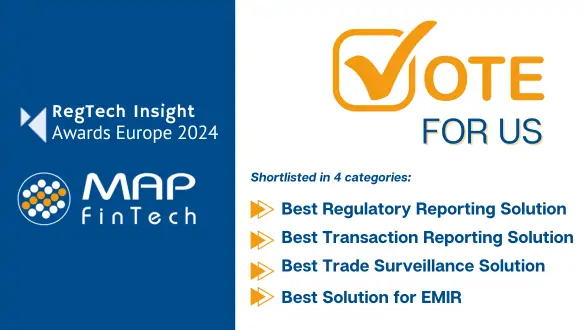
We are delighted to announce that Complyport Tech has once again secured its position as a finalist in four categories at A-Team Group’s 2024 RegTech Insight Awards Europe. These awards recognize both established solution providers and innovative newcomers who have created effective RegTech solutions over the past year, enhancing firms’ capacity to adapt to the constantly evolving and complex regulatory demands in the global financial services sector. For Complyport Tech, these accolades serve as a testament to our commitment to excellence and innovation in developing cutting-edge RegTech solutions that empower financial institutions to effectively navigate the intricate landscape of regulatory compliance. Your unwavering support has been instrumental in our journey, and we are deeply grateful for your continued trust and endorsement. We invite you to cast your vote to further champion Complyport Tech and showcase your firm belief in our products and services. Complyport Tech has been shortlisted in the following categories: Best Transaction Reporting Solution (Category 3) Best Regulatory Reporting Solution (Category 4) Best Trade Surveillance Solution (Category 8) Best Solution for EMIR (Category 16) The last day to vote is Tuesday, 26th March 2024. Your participation in the voting process is invaluable to us, and we thank you once again for being a part of our success story.
Complyport Tech Wins Award for Most Innovative Technology for Regulatory Compliance at the 2024 APAC RegTech Insight Awards
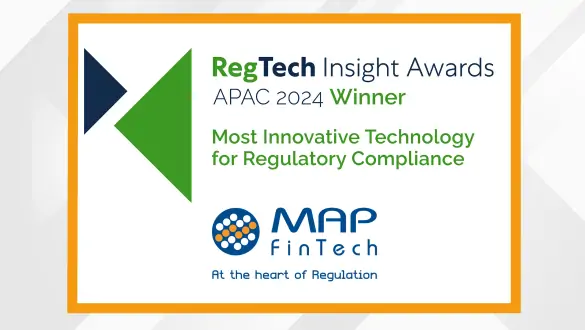
We are excited to announce that Complyport Tech has received the award for the Most Innovative Technology for Regulatory Compliance at the 2024 RegTech Insight Awards APAC. The APAC RegTech Insight Awards highlight RegTech solutions that have successfully improved firms’ ability to effectively respond to evolving and increasingly complex regulatory requirements in the global financial services sector. Over the years, MAP FinTech has developed fully automated solutions for various regulatory requirements such as EMIR, MiFIR, SFTR, ASIC, MAS, FATCA, DAC6, and CRS. MAP FinTech also provides innovative and comprehensive solutions for Best Execution Monitoring, RTS 27/28 reporting, AML Transaction Monitoring and Screening, Trade Surveillance (Market Abuse), and eKYC (Client on Boarding, Screening, eIDV, Document Authentication). Our Polaris platform, with its advanced capabilities for reconciliation, validation, and monitoring, has become an extremely useful tool for regulated entities, being recognised as a leading regulatory platform with a proven track record of success and performance. The technology and support processes involved have been finetuned over the years, making Polaris one of the most mature regulatory reporting platforms in the market. This powerful centralized solution allows for the configuration, management, and monitoring of all our RegTech products via a single and user-friendly online portal, one that relies on existing client data sets to deliver seamless reporting, transparency, and efficiency. For more information about MAP FinTech’s RegTech solutions, please click here.
Unique Product Identifier: Modalities and Technicalities

In our previous blog post we briefly mentioned when a UPI will be necessary to comply with the EU EMIR-REFIT. Here we will show you how to generate or retrieve a UPI from the ANNA-DSB. This article goes beyond EU EMIR – REFIT as the same modalities presented below can be applied to all jurisdictions that have endorsed the UPI, including, but not limited to, the USA, the UK, Australia, the EU, Singapore, etc. UPI inputs In order to achieve harmonisation across jurisdictions and streamline inputs, the UPI standard has adopted variable standards widely used in the financial industry. A few of these inputs include: ISDA’s taxonomy ver.2 for the categorisation of products; CFI codes ISO standard 10962 ver.2015 for the classification of products; ESMA’s Transparency Calculations (TTC) for equity indices; ISDA’s FpML for commodity definitions and interest rates; Etc. To correctly generate or retrieve the UPI code, market participants need to familiarise themselves with these inputs to avoid generating or retrieving incorrect UPI code ANNA-DSB has produced a library of product definitions for the UPI where market participants will find all necessary information contained therein. UPI generation/retrieval In order to be allowed to generate UPIs, the ANNA DSB requires interested parties to sign up to its service and pay a fee correlated to the amount of UPIs said parties need to generate on a yearly basis. In the case where the interested party is only looking to retrieve already issued UPIs, the ANNA DSB service offers a free registration option that has some limitations. The UPI, as we shall see, is issuer agnostic. That means that the UPI is not attached to the entity that generated it. Hence, where an entity has generated a UPI with specific attributes, for example, a Non-Deliverable Forward on EURUSD where the settlement currency is the EUR, another entity offering the same deliverable forward with the same attributes can retrieve the UPI previously issued for its reporting needs. The UPI request template describing the various attributes that the interested party needs to provide to issue the correct UPI can be found in the product libraries linked above. In our example, we will show you what values need to be inserted for a NDF on the EURUSD and settled in EUR. The ANNA-DSB systems will request the following items in order to generate the UPI. Therefore the system will require to identify the following parameters, in parenthesis the source for each input. Asset Class = Foreign_Exchange (ISDA Taxonomy); Instrument type = Forward (ISDA Taxonomy); Product = NDF (ISDA Taxonomy); Level = UPI (ANNA DSB); Underlier ID = EUR (ISO 4217 – currency 3 letter code); Underlier Source = CCY (ANNA-DSB); Other Underlier ID = USD (ISO 4217 – currency 3 letter code); Other Underlier ID Source = CCY (ANNA DSB); Settlement Currency = EUR (ISO 4217 – currency 3 letter code). The system will generate the UPI. The UPI will contain the inputs the generating entity inserted but will also contain derived values generated from ANNA DSB such as the instrument’s name, the CFI, and other characteristics. As we can see from the output, the instrument is issuer agnostic, i.e. there is nothing in the UPI that ties this specific UPI with the entity that issued it. Where another entity trades with NDFs on EURUSD settled in EUR, they can use this previously issued UPI for their reporting needs. Moreover, the above record will be publicly available to all registered users to the UPI service, including, but not limited to, regulators who can cross check the reported values (e.g. CFI, instrument name, settlement currency, etc.) with the UPI contained values used to verify a correct submission. Attention From the above example we would like to draw the attention of UPI generating or retrieving entities to the following: Ensure familiarity with the mentioned inputs When using an already issued UPI, ensure that the product you intend to trade matches 100% all the UPI attributes relevant to the product. Familiarise yourself with ANNA-DSB’s production and testing environment for UPIs. How is Complyport Tech going to assist? Complyport tech offers the UPI Link Service that helps retrieving companies match their products’ attributes precisely to those already issued UPIs, ensuring that reporting companies use the correct UPI Code. Complyport Tech’s UPI Link Service boasts essential functionalities, including: Automated identification of UPIs using reference data provided by the reporting entity and the latest issued UPIs supplied by the ANNA-DSB. UPI enrichment of reported files prior to submission to the TR. Error identification where UPIs cannot be mapped against the ANNA-DSB’s issued UPI records. Inline editing capability for on-the-fly amendments on the UPI. Advanced search function from within Polaris portal which can pinpoint the exact UPI based on enhanced search criteria.
Cast your Vote for Complyport Tech at the 2024 RegTech Insight APAC Awards

We are thrilled to announce that Complyport Tech has been shortlisted in six categories at A-Team Group’s 2024 RegTech Insight Awards APAC! The RegTech Insight Awards – APAC recognise both established solution providers and innovative newcomers. They highlight RegTech solutions that throughout the year have successfully enhanced firms’ ability to effectively respond to evolving and ever more complex regulatory requirements across the global financial services sector. We would greatly appreciate it if you could take a moment to support us by casting your vote. MAP FinTech has been shortlisted in the following categories: Best Regulatory Reporting Solution Best Transaction Reporting Solution Best Innovative Technology for Regulatory Compliance Best Trade Surveillance Solution Best FATCA Solution Best Vendor Solution for the Common Reporting Standard (CRS) The last day to vote is Friday 19th January 2024. Thank you in advance for your continued support and loyalty!
Prestigious Recognition: Complyport Tech on the RegTech100 List for the Fifth Consecutive Year

Complyport Tech, a leading and award-winning regulatory technology provider, proudly announces it has been selected as part of the RegTech100 list for the fifth consecutive year. The RegTech100 list is an exclusive directory of the world’s most innovative RegTech companies released by the specialised research firm RegTech Analyst. The 2024 list showcases the most innovative and disruptive businesses in the regulatory technology space that are seeking to help financial institutions manage the fast-paced changes brought on by ongoing regulatory updates and technological advances. A panel of analysts and industry experts assessed a longlist of nearly 1,400 businesses, which was produced by RegTech Analyst. They aimed to emphasise the technological solutions that every compliance, risk, and innovation leader in financial services should be aware of in 2024. Expressing his pride in this accomplishment, Panayiotis Omirou, CEO of MAP FinTech, said: “Securing a place on the esteemed RegTech100 list for the fifth consecutive year is a remarkable feat. It highlights the company’s continued distinction in a competitive arena as a result of our world-class and cutting-edge products”. RegTech Analyst Director of Research, Mariyan Dimitrov, said: “With tougher economic climate and the continued rise of AI, financial institutions are re-examining the compliance software’s true cost, namely whether a given RegTech solution truly will free up compliance staff for higher-level tasks and whether the software can scale, adapt, and get implemented efficiently”. A full list of the RegTech100 and detailed information about each company is available to download for free at www.RegTech100.com. About RegTech100 The RegTech100 is an annual list of 100 of the world’s most innovative RegTech companies selected by a panel of industry experts. These are all companies that financial institutions must be aware of as they develop their RegTech and digital transformation strategies. About MAP FinTech’s Polaris Platform: The Polaris Platform is MAP Fintech’s cloud-based software solution that helps financial services firms manage their regulatory obligations vis-a-vis regulations such as EMIR, MiFID II/MiFIR, ASIC, MAS, SFTR, FATCA, CRS and DAC6. MAP FinTech also provides innovative and comprehensive solutions for Best Execution Monitoring, RTS 27/28 reporting, KYC & AML Transaction Monitoring, Trade Surveillance (Market Abuse), and eKYC (Screening, eIDV, Document Authentication). By being able to meet all of their regulatory reporting obligations using our Polaris Platform, our clients can focus on what they do best without burdening their operational flexibility, while retaining their peace of mind. Our services are bundled with solutions from some of the biggest vendors in the market, a fact that ensures service quality. This is complemented by our deep compliance expertise, which allows us to cover our clients’ extensive regulatory reporting needs. Developed in-house, the Polaris Platform allows our clients to have complete control over the entire reporting process—from data sourcing to validations, enhancements, generation and submission of the reports, and receival and presentation of feedback—through a user-friendly portal. It also delivers unparalleled flexibility to quickly adapt to a dynamic and rapidly evolving regulatory environment. Contact our team of experts to find out how you can benefit from our innovative and comprehensive regulatory reporting solutions.
Supporting Prostate Cancer Awareness: Complyport Tech Sponsors “Let’s Shave” Event

We are delighted to announce that for the second consecutive year, MAP FinTech will be a Silver Sponsor of the “Let’s Shave” Event organised by the Limassol Women and Men Hairdressers Association. The primary objective of this event is to educate and promote awareness of prostate cancer amongst men with part of its proceeds being donated to the Oncology Ward of the Limassol General Hospital. For those of you interested in participating and supporting this worthy cause, the event will take place on 16 November 2023, from 4:00 p.m. to 7:00 p.m., at INDUSTRY BAR on Saripoulou Street in Limassol. You will have the opportunity to get your beards or moustaches groomed or trimmed by a seasoned professional for a minimum donation of five (5) euros. We hope to see you there, as your participation will help raise awareness and support individuals in their battle against this prevalent form of cancer.
EU/UK EMIR REFIT’s Transition Period: Updating the outstanding derivatives to conform with the revised reporting requirements

Partner up with Complyport Tech today to overcome this challenge. As the deadlines for implementing EMIR reporting changes approach in the EU (April 29, 2024) and the UK (September 30, 2024), it’s imperative to understand the intricacies of these new requirements. From the reporting start date onwards, all reports submitted by the Reporting Counterparties and Entities Responsible for Reporting to the TRs will have to comply with the new regulatory requirements. This refers to derivatives that will be concluded after the reporting start date, as well as to any modifications or terminations reported after that date, irrespective of when the derivative was concluded, meaning that it could apply to an outstanding derivative (i.e. a derivative concluded and reported before the reporting start date). Specifically, reporting entities will be provided with a transition period of 180 calendar days to update their outstanding derivatives to comply with the new regulatory requirements. In order to do this, they can use a special event type named ‘Update’ unless they have submitted a full message report with the action type ‘Modify’ or ‘Correct’ where they will need to include the full details of the derivative report in accordance with EMIR REFIT’s new Regulatory and Technical standards. It is crucial to note that EU and UK EMIR REFIT introduce 87 and 88 new fields, respectively. Moreover, a significant number of fields have undergone modifications in terms of their name, description, acceptable values, or a combination of factors. The above showcases the substantial preparatory work that Reporting Counterparties and Entities Responsible for Reporting will be required to perform, as they must update all affected fields for outstanding trades to meet the new standards. A noteworthy exception is that reporting entities should not create new Unique Trade Identifiers (UTIs) for outstanding derivatives, even if the UTI is not fully compliant with the new format requirements. However, any other fields affected by EMIR REFIT in the context of outstanding trades must adhere to the revised requirements when reporting. It’s important to emphasise that the transition period does not impact the obligation to report relevant events by T+1. This means that any event occurring after the reporting start date must be reported by the end of the following working day (T+1). Undoubtedly, meeting this requirement poses a significant challenge for reporting entities. Moreover, under the new reporting standards, certain reporting entities might be required to make adjustments to their reporting style or changes to the way they report collateral and valuations messages. Once more, this underscores that reporting entities must meticulously formulate their action plans and implement them all at once to ensure that their outstanding trades will promptly conform to the updated standards. Insufficient readiness in this regard could potentially render reporting entities vulnerable. Furthermore, it is essential to note that reporting entities not utilizing delegated reporting and having counterparties bound by the same reporting obligation must initiate communication with these counterparties concerning the treatment of outstanding trades. This communication aims to coordinate the required adjustments around outstanding trades to ensure the alignment of both sides with EMIR REFIT regulations. Lastly, a crucial point to grasp is that all the preparatory measures outlined above must be executed concurrently with the ongoing EMIR reporting procedures to ensure that the current EMIR reporting processes remain unaffected and operational until the final relevant date. At Complyport Tech, we hold substantial expertise in effectively managing migration and transition phases, as well as addressing outstanding trades within these contexts. Our proven strategies have been successfully applied on numerous occasions in the past during previous regulatory updates like EMIR, as well as migrations of reporting entities from other Trade Repositories and service providers. Specifically, our comprehensive toolkit streamlines the process of automatically updating outstanding trades in one go, adhering to the new standards and minimizing the burden on the reporting entity’s end. Complyport Tech can fully assist any firm under EMIR Reporting to seamlessly adapt to the evolving reporting requirements brought on by EMIR REFIT. Contact our team of experts and learn how you can benefit from our innovative and comprehensive regulatory reporting solutions.
EU/UK EMIR REFIT: Your Increased Data Quality Reconciliation Requirement

Partner up with Complyport Tech today to overcome the challenges! With the deadlines approaching for the implementation of the changes to EMIR reporting in the EU (April 29, 2024) and the UK (September 30, 2024), it is crucial to understand these new requirements fully. Based on the new EU and UK standards, there has been an increased data quality reconciliation requirement. In this context, reconciliation refers to the process by which Trade Repositoriess (TRs) validate that both sides of a derivative transaction have been reported with identical information by each Reporting Entity. While the TRs will be responsible for performing this task, the ultimate responsibility for a complete and accurate reporting lies with the Reporting Entities. This entails ensuring that trades are eventually paired and matched (as described in the definitions and example below). Reporting Entities must receive the outcomes of the inter/intra TR reconciliation exercise and resolve any unpaired or unmatched transactions to ensure the completeness and accuracy of their reporting. Pairing is the process followed by the TRs to identify and pair the two sides of the same derivative transaction using the fields UTI, Counterparty 1 and Counterparty 2. Matching is the process followed by the TRs after the successful pairing process to match specific fields (e.g. field Direction) of the trade that must be common between both sides of the same derivative transaction. Example: Transaction side UTI Counterparty 1 Counterparty 2 Direction 1 UTI123 LEI of counterparty 1 LEI of counterparty 2 BYER = buyer 2 UTI123 LEI of counterparty 2 LEI of counterparty 1 SLLR = seller EMIR REFIT has brought about a notable escalation in the complexity of data quality reconciliation requirements. This is primarily attributed to a significant increase in the number of reconcilable fields, which has risen from 80 to 148. Additionally, the introduction of more stringent matching tolerances has contributed to this heightened complexity. Below you can find some examples of fields that have become reconcilable: UPI (from the start date) Valuation fields (2 years after the start date) PTRR (Post-Trade-Risk-Reduction) (from the start date) Further Sub-product (2 years after the start date) Furthermore, the reconciliation process will be conducted in two phases. First, upon the reporting start date, 87 fields will be subject to reconciliation. Subsequently, another 61 reconcilable fields will come into effect two (2) years after the commencement of the reporting obligation. At Complyport Tech, we offer a range of tools to assist reporting entities in meeting this requirement effectively. To start off, we align with ESMA’s approach, which promotes delegation. Doing so ensures that the most common reporting fields are consistently reported between counterparties. For the remaining counterparty-specific fields, we employ various techniques to populate them based on the initial information provided automatically. In the case of delegation, we provide several options for the other counterparty (the delegator) to receive the reported files and the results of the inter/intra TR reconciliation exercise in a user-friendly and easily understandable format. These formats could include CSV files instead of XML, and tables and graphs that can be conveniently accessed through the Polaris portal. This ensures a seamless and efficient process for all parties involved. Furthermore, even in cases where delegation is not applicable or for any other reason not utilised by the counterparties, our reporting platform allows the reporting entity to facilitate in an efficient way the same reports used by its counterparty, thereby enabling both parties to work with identical information for the purpose of reconciliation. At Complyport Tech, we have developed these procedures and tools with the specific aim of helping companies meet their reconciliation obligations effectively. Our goal is to ensure that they can maintain continuous compliance with these increased data quality reconciliation requirements. Contact our team of experts today and achieve a smooth transition to the changes in reporting requirements brought on by EMIR REFIT.
EU/UK EMIR REFIT: A Significant Increase to the Number of Reportable Fields
Partner Up with Complyport Tech to Overcome Your Challenges With deadlines approaching for implementing the new EMIR reporting standards in the EU (April 29, 2024) and the UK (September 30, 2024), it is crucial to fully understand these new requirements and what they entail. Based on these new standards, there has been a significant expansion in the number of relevant fields with them increasing from 129 to 203 in the EU and 204 in the UK. Considering the removal of 13 fields, this means the introduction of 87 new fields in the EU and 88 in the UK. Moreover, approximately 100 fields have undergone modifications in terms of their name, description, acceptable values, or a combination of these factors. Overall, this increase in the number of fields poses a significant challenge and could potentially burden reporting entities. For instance, they now face the task of locating new fields, sourcing the necessary information, and incorporating them into their regular reporting cycle. Among the new field additions, one that should have a substantial impact is the introduction of the “Event Type” field. While the “Action Type” field addresses the “What” aspect of a transaction, the “Event Type” field delves into the “Why” aspect, offering greater granularity to the event’s lifecycle. When combined, these two fields, “Action Type” and “Event Type,” results in 56 distinct and permissible combinations of values, which in turn significantly alters the lifecycle event management and necessitates specific actions within the entity’s reporting system. These actions are necessary in order to capture these events accurately and seamlessly and incorporate the changes into the reporting workflow, enabling their automatic reporting when the relevant conditions are met. An indicative short list of EMIR REFIT’s newly introduced field-related changes can be found below: Unique Product Identifier (UPI) obligations Crypto-asset-related derivative flag Post Trade Risk Reduction (PTRR) related fields New Action Type values Event Type field Delta The new fields mandated under the updated ITS/RTS, both individually and collectively, pose a distinctive challenge for firms. As previously mentioned, this challenge is multifaceted, starting with identifying and localizing these fields, extending to their acquisition, and ultimately incorporating them seamlessly into the reporting cycle. Furthermore, the increase in the number of EMIR REFIT fields compounds the complexity of an already complicated task, one that includes coordination between reporting counterparties to ensure the accurate completion of these fields to prevent unnecessary pairing and matching issues. In addition, if not handled correctly, this increase may result in an elevated risk of receiving more rejections from Trade Repositories (TRs) and failures to match, given that with the new RTS/ITS additional fields will be reconciled by TRs. Moreover, firms will now have to deal with larger incoming and outgoing files (the more fields, the bigger and more complex the file becomes), introducing additional overheads in terms of processing resources, storage requirements, and the level of complexity when working with these files. At Complyport Tech, we are well-equipped to help you with these challenges. Firstly, we can provide valuable guidance in understanding which reportable fields are relevant to your specific trading model and activity. Furthermore, we offer flexibility in terms of how this information is retrieved or received from the reporting entity, ensuring the seamless integration of data. Our approach to the increase in the number of fields involves requesting only the necessary information from the reporting entity, while employing conditional rules and enhancement criteria to complete the remaining required fields. This facilitates the reporting process and reduces the burden on the reporting entity. Furthermore, our Polaris web portal (the interface of our Polaris reporting platform) offers an efficient solution for managing fields that do not change very often (the so-called static information). This user-friendly portal simplifies the task for reporting entities, making field management as straightforward as possible. Also, our reporting algorithms are designed to automatically identify relevant actions taking place in the client’s trading system or data and map them to the appropriate action and event types in reporting, thus providing substantial assistance to the reporting entity to overcome this challenge. Lastly, thanks to the numerous validations incorporated into our Polaris reporting platform, potential rejections are caught at an early stage within the reporting system before they reach the TRs and the National Competent Authorities (NCAs). This proactive approach ensures that, despite the increase in the number of fields, reporting firms will maintain a healthy reporting framework and remain compliant at all times. Partner Up with Complyport Tech to Overcome Your Challenges Complyport Tech is a leading and award-winning global regulatory technology provider, highly regarded for its proprietary reporting technology and exceptional client-centric after-sales support. As one of the first providers in Europe to report under the European Market Infrastructure Regulation (EMIR), with billions of transactions reported successfully so far, we have built a reputation for excellenhttps://mapfintech.com/solutions/ce, coupled with the necessary regulatory expertise and technological innovation to help navigate their respective regulatory obligations. Contact our team of experts to learn how you can benefit from our innovative and comprehensive regulatory reporting solutions and achieve a smooth transition to the changes in reporting requirements brought by EMIR REFIT.